
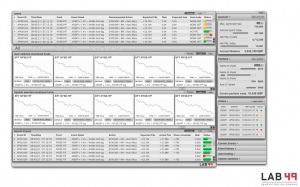
 Matt Davey, the head of delivery at Lab49 in Europe, has been blogging for the past couple of months about an ETF-based statistical arbitrage POC he’s building in their LabInnovation center. They are using Solace as their message bus for this project to manage market data and to drive the StatArb UI as outlined in part 7 and part 8 of his blog series.
Statistical arbitrage against ETFs is a perfectly logical profit opportunity. Many ETFs aim to mimic a well known index using an basket of financial instruments, including options, derivatives and more. When the ETF strays statistically beyond its normal boundaries from the underlying index, or if a calculation of the sum of the ETF parts shows that the ETF is temporarily mispriced, there may be an opportunity for arbitrage while they reconverge.
The Lab49 console can either alert the user to the opportunity, or automatically trade it based on configured rules.
Very cool stuff.
Explore other posts from category: Use Cases




Subscribe to Our Blog
Get the latest trends, solutions, and insights into the event-driven future every week.