
Agentic AI has moved into the mainstream, but turning it into something
genuinely useful depends on access to trusted, real-time data.
Eighteen months ago, most enterprise AI conversations started with the same question: which model should we use? That question still matters. But it is increasingly not the hardest one.
The harder question is whether your AI agents can access the right enterprise data, at the right time, and trust what they receive enough to act on it.
We asked IDC to examine the current state of real-time data and what it means for the adoption of agentic AI. IDC surveyed 623 technology decision-makers at companies with more than $1 billion in revenue across eight countries. It then assessed how far each organization had progressed in its use of real-time data.
The findings are now available in a new report, which you can download here. I’ll be going over the results with the author in a live webinar on September 26. Here are a few things that stood out to me.
Agentic AI is not a Future Trend
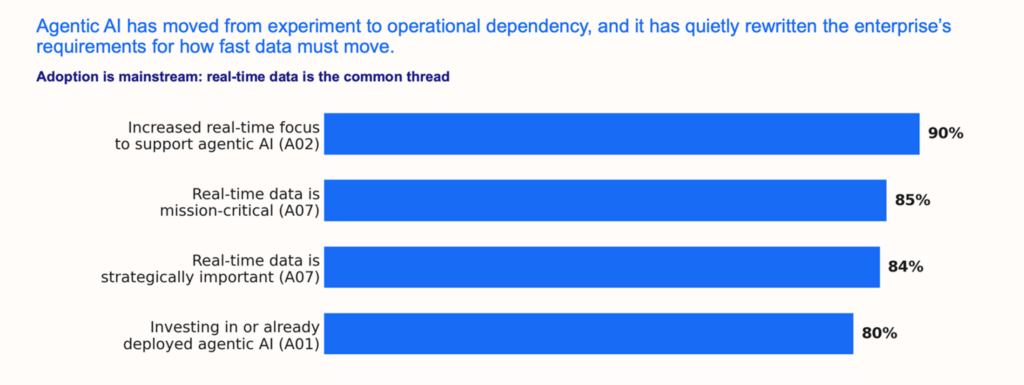
Organizations across all four maturity tiers identified by IDC are already deploying agentic AI in some form.
When respondents were asked what was driving their growing need for real-time data, agentic AI ranked first – above security, cost and regulatory pressure.
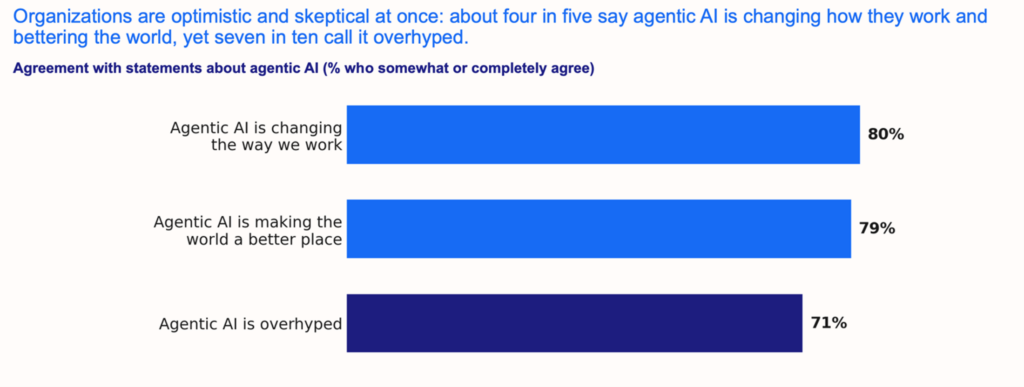
But widespread adoption should not be confused with complete confidence. Four in five respondents said agentic AI is changing how they work. Seven in ten also described it as overhyped.
Those views are not as contradictory as they might sound. They reflect many of the conversations I am having with customers. Companies believe agentic AI will be important, but they are also working out where it can produce meaningful results and where it is still mostly noise.
That tension between enthusiasm and skepticism is now shaping budgets, priorities and architecture decisions.
The Real Gap is Access to Real-Time Data
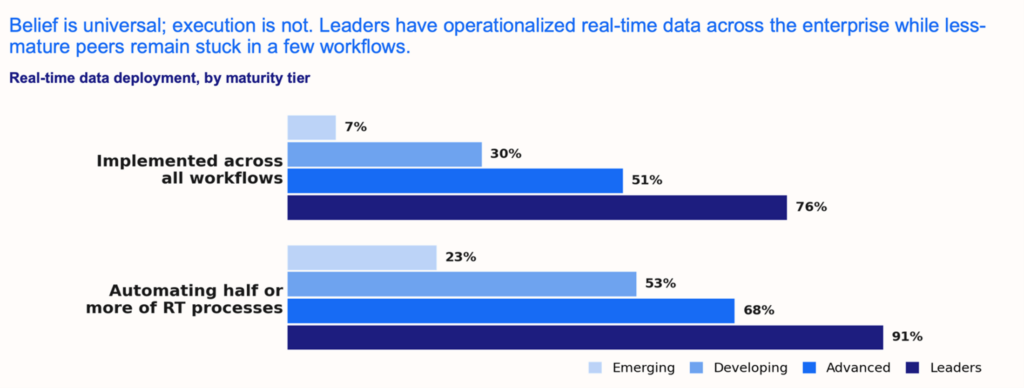
IDC assessed each organization against a composite measure covering real-time deployment, agentic AI adoption and measurable business outcomes. It then placed them into four tiers: Emerging, Developing, Advanced and Leaders.
The difference between the top and bottom tiers is significant. Among Leaders, 76% use real-time data across most or all of their workflows. Among Emerging organizations, only 7% do. Almost everyone agrees that AI agents need current data. Far fewer organizations have built the infrastructure needed to provide it.
Leaders are also three times more likely to have several AI agents in production and twice as likely to report measurable results from their AI investments.
The report shows a clear relationship: organizations that are more mature in their use of real-time data are also further ahead in putting agentic AI into production and getting results from it.
What Leaders do Differently
Three differences stood out.
- Leaders consolidate. Instead of continuing to add separate tools for messaging, streaming and integration, they are more likely to standardize how data moves across the organization.
- They make real-time data a shared capability. The knowledge does not sit exclusively inside a central infrastructure team. It is made available to the application teams building and operating the systems that depend on it.
- They invest before demand becomes urgent.
Between 94% and 97% of organizations in every maturity tier expect to increase spending on real-time data and agentic AI over the next year. Those budgets are rising together because organizations are beginning to understand that they are part of the same problem. The Leaders simply started earlier.
That investment appears to be working. Almost nine in ten respondents said their real-time data investments had met or exceeded expectations. Leaders are not continuing to invest based solely on a future promise. They are doing it because their previous investments have already produced results.
Take AI agents from idea to production, and keep making them better.Solace Agent Mesh is an agent development and runtime platform that lets you build, test, deploy, observe and improve every agent through one lifecycle.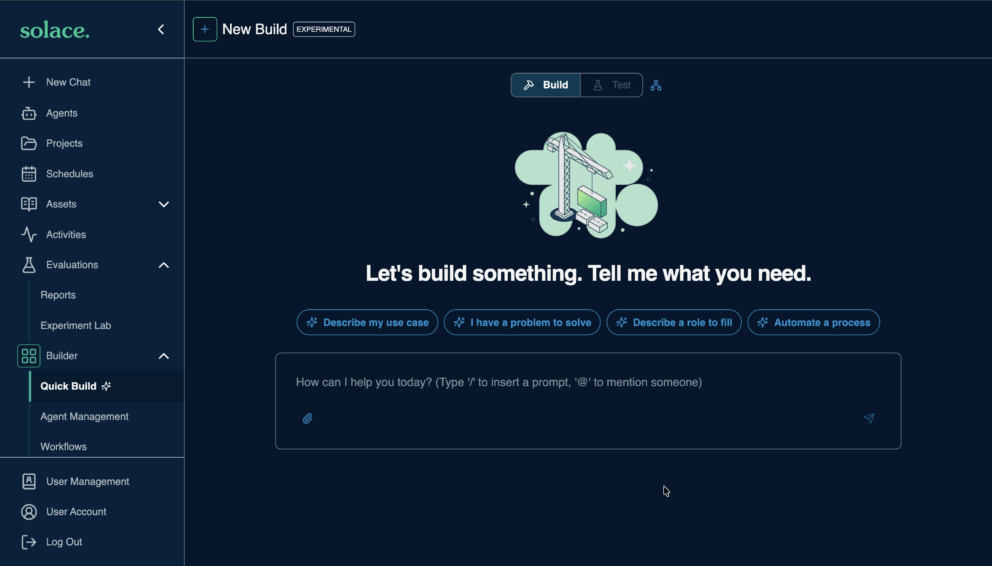
The Models are not the Main Blocker
When IDC asked organizations about the biggest obstacle to scaling AI agents, model quality did not come first. The biggest barrier was connecting agents, in real time, to enterprise data they could trust. The hardest technical challenge reported, even by the most mature organizations, was data quality and consistency.
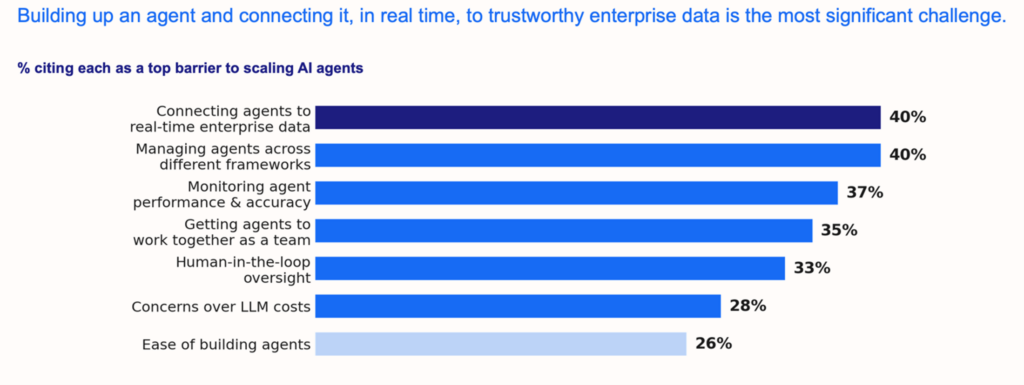
This is important because it changes how we should think about agentic AI. A more capable model does not solve the problem if the information reaching it is late, incomplete or wrong.
An agent can only make a good decision if it understands what is happening now. In an enterprise, that means being connected to trusted data and events as they happen – not relying solely on data copied into another platform hours or days earlier.
My Takeaway
If your organization is investing in agentic AI – and according to IDC, almost every large enterprise is – the real-time data foundation underneath it needs as much attention as the model strategy sitting above it. Real-time, event-driven data should be treated as core AI infrastructure, not as an analytics project or another integration problem to solve later.
Organizations should also deal with the growing collection of disconnected messaging, streaming and integration tools before that complexity becomes permanent. Most importantly, agents need to be connected to data the business trusts, with the context and immediacy required to act on it. The agent itself may be the most visible part of the architecture. But it will not be the part that determines whether this works.
The full report includes IDC’s maturity framework, detailed findings and a way to assess where your own organization sits today.
Explore other posts from category: Artificial Intelligence




Subscribe to Our Blog
Get the latest trends, solutions, and insights into the event-driven future every week.